

 TIG Self-Advocacy Guidance Google Site
 Wisconsin County Community on Transition (CCoT) Toolkit
 Resources
TIG Self-Advocacy Guidance
Content Areas Self Advocacy
Resource Type Link
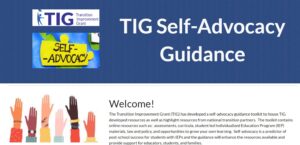
The Transition Improvement Grant (TIG) has developed a self-advocacy guidance toolkit to house TIG developed resources as well as highlight resources from national transition partners. The toolkit contains online resources such as: assessments, curricula, student led Individualized Education Program (IEP) materials, law and policy, and opportunities to grow your own learning. Self-advocacy is a predictor of post-school success for students with IEPs and the guidance will enhance the resources available and provide support for educators, students, and families.
Summary of Performance (SoP) Best Practice Student/Teacher Collaborative Form – Fillable
This document is intended to be completed by the student AND teacher together.

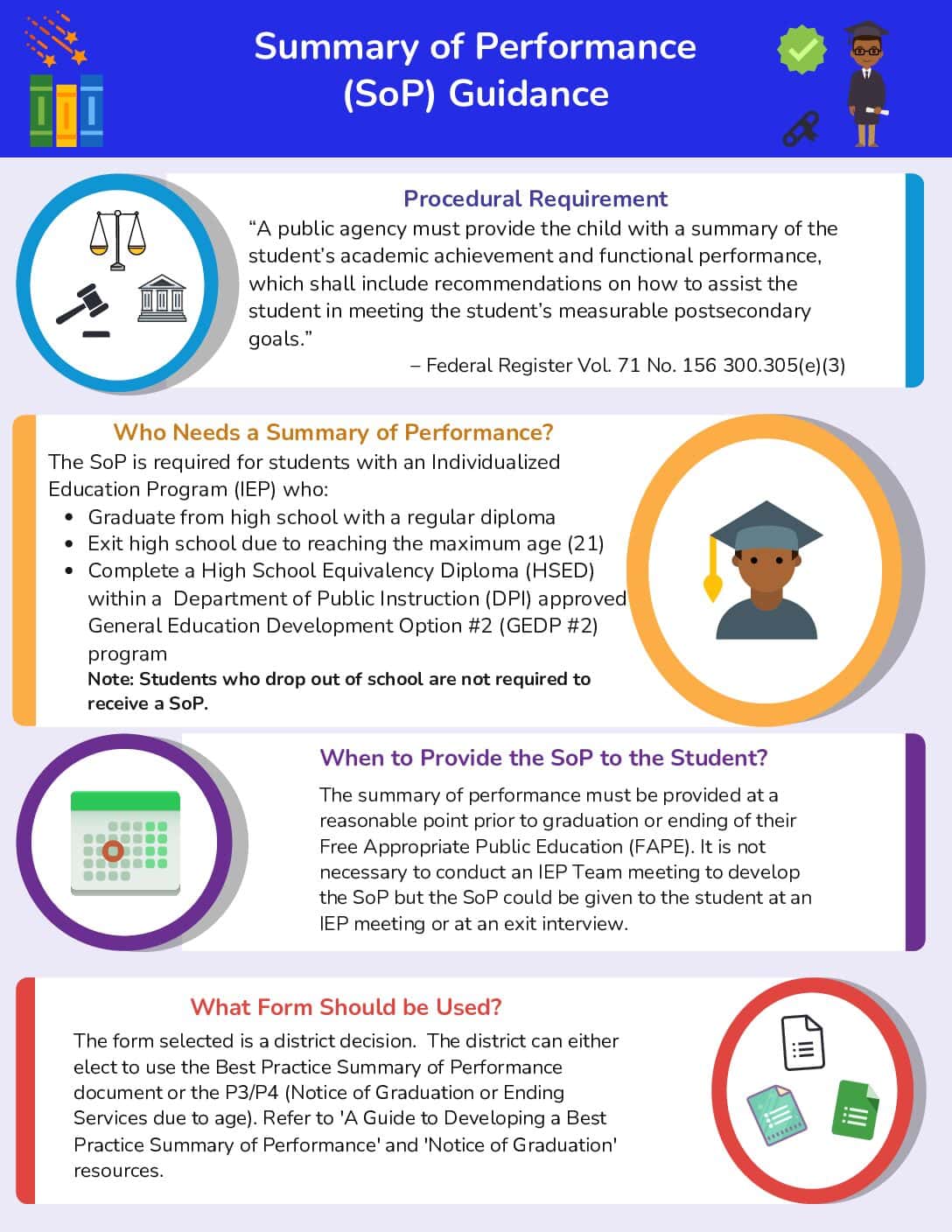
Summary of Performance Guidance
Content Areas Best Practices
Resource Type Document
The Summary of Performance Guidance provides an overview of the requirements of a summary of performance and key resources that can assist with completing one.
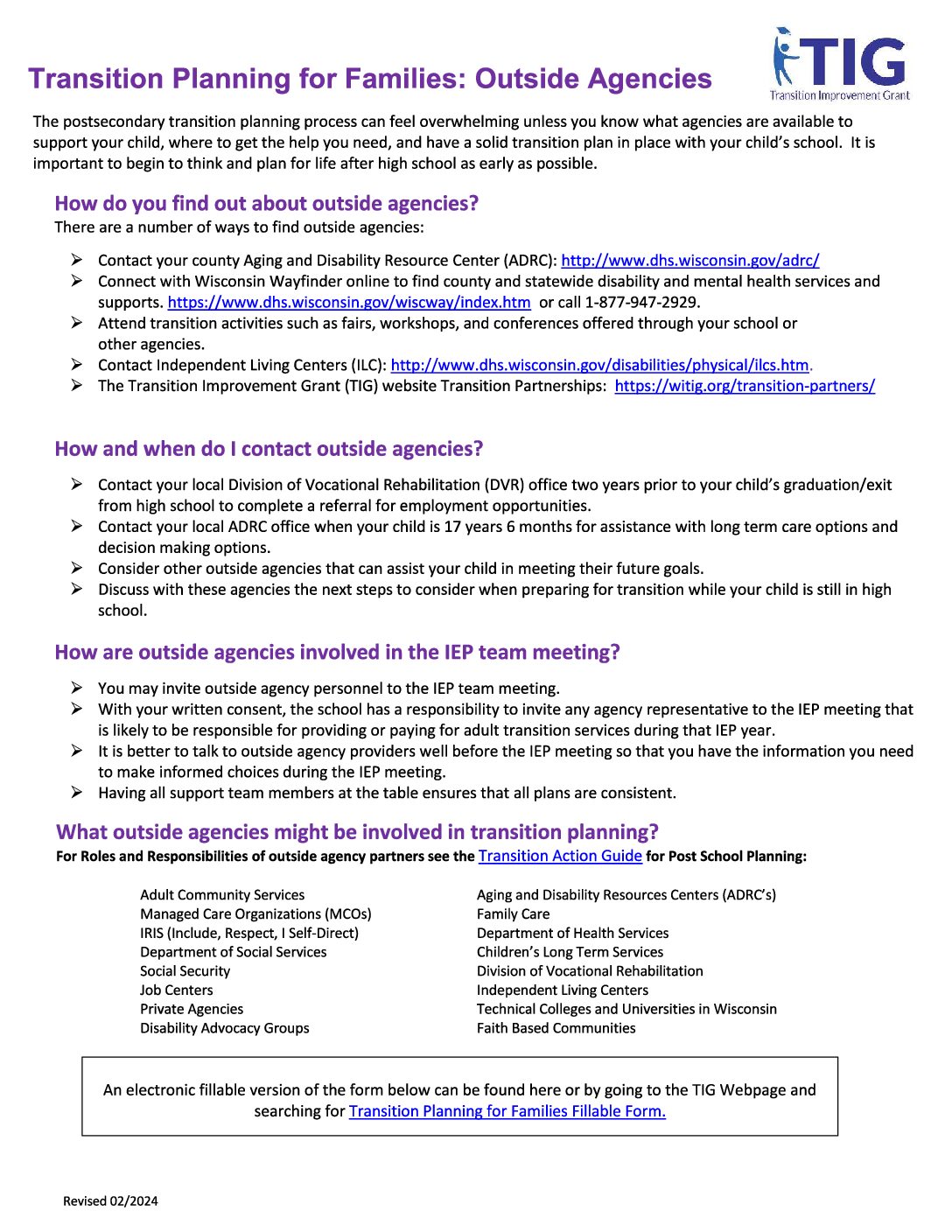
Transition Planning for Families Fillable Form
Content Areas Indicator 13 - Postsecondary Transition Plan
Resource Type Document
The postsecondary transition planning process can feel overwhelming unless you know what agencies are available to support your child, where to get the help you need, and have a solid transition plan in place with your child’s school. It is important to begin to think and plan for life after high school as early as possible.
Culturally Responsive Transition Planning: Educator Reflection
Content Areas Indicator 13 - Postsecondary Transition Plan
Resource Type Document
It is important for educators to support students and families in developing postsecondary goals, and supports and services that can be tied into their Preferences, Interests, Needs, and Strengths, including connecting individuals with the communities in which they live and the strengths and assets that their individual experiences, families, and communities bring. This document will provide guiding questions for reflection during the transition planning process.

Indicator 14 Post School Outcomes Interactive Map
Content Areas Indicator 14 - Post School Outcomes
Resource Type Link
This webpage is a series of maps showing the five major outcomes for these youth. The data are based on an unduplicated count of successfully completed interviews, meaning respondents are counted in only one category, and in the highest category listed in the following order: Higher Education, Competitive Employment, Other Postsecondary Education or Training, Other Employment, and Not Meeting Indicator 14 Participation Criteria. Each outcome is aggregated by school district (LEA) and by county. Maps are interactive.

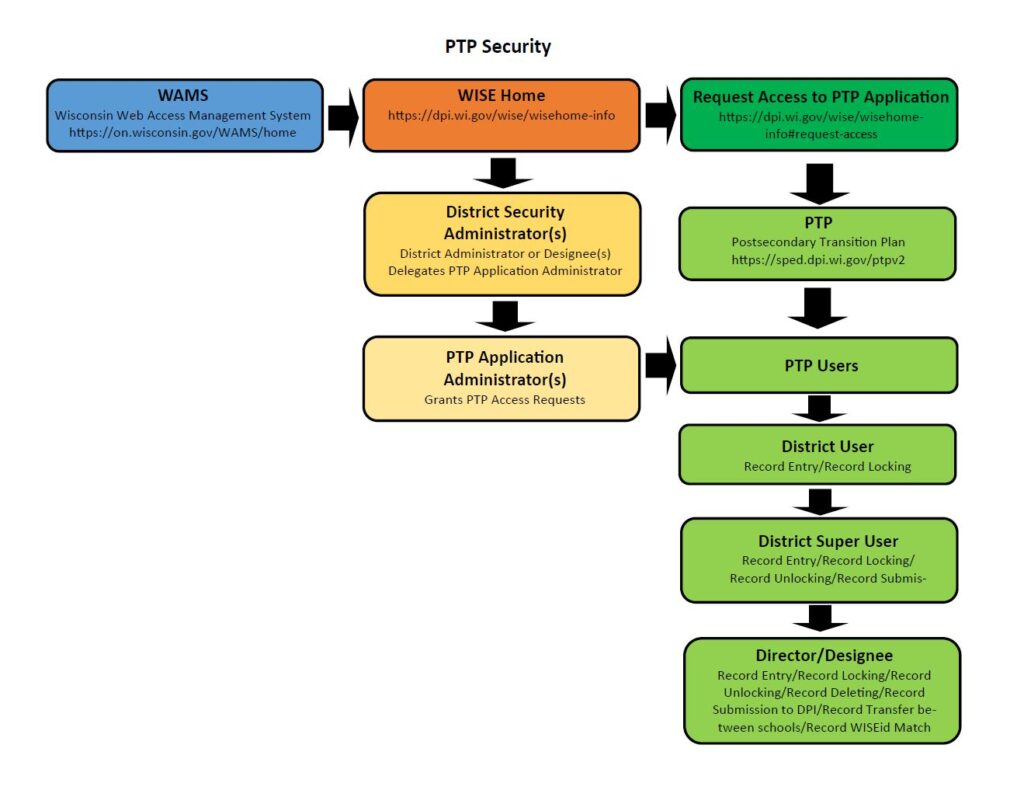
PTP Security Diagram
Content Areas Indicator 13 - Postsecondary Transition Plan
Resource Type Document
This resource shows the process for administrators and PTP users to gain access to and create PTPs.
Transition Programming Beyond Age 18
Resource Type Document
The Beyond Age 18 website is designed to help teams create meaningful, individualized special education services for students with IEPs who stay in high school after their peers graduate. For some students with IEPs this time may be used to finish credits towards graduation with a regular high school diploma while others may build skills as they transition to life after high school. This guidance is provided to help teams reflect on what supports are needed and where, as well as connecting with outside agencies and braiding services to improve post school outcomes for students with IEPs.

PTP Checklist
Content Areas Indicator 13 - Postsecondary Transition Plan
Resource Type Document
Want to review your PTP’s for compliance but also make sure they align with effective practices? Please use the guide above to review each section for tips and practices that will move the PTP to a meaningful document that captures the robust conversations of your IEP meetings. The PTP Portal is identified with steps that are also reflected in the guide for your reference.

Age-Appropriate Transition Assessment
The IEP must include appropriate measurable postsecondary goals based upon age-appropriate transition assessment related to training, education, employment, and where appropriate, independent living skills. 34 CFR 300.320(b)(1), IDEA

Notice of Graduation Charts
Resource Type Document
These sample charts can be utilized to help determine which Notice of Graduation for should be used for a student, as well as using the Best Practices Summary of Performance (SoP Student/Teacher Collaboration form or SoP Teacher Best Practice form).

Graduation Rate Improvement Plan (GRIP): Research Support and Resources
Content Areas Indicator 1 & 2 - Graduation and Dropout Rates
Resource Type Document
The Graduation Rate Improvement Plan: Research Support and Resources guide is designed to be an interactive tool that provides teams access to updated research relating to dropout prevention as well as direct access to evidence based practices, applicable tools, and examples from the field. This resource was created to enhance the use of the Wisconsin Graduation Rate Improvement Plan (GRIP) tool created by the Transition Improvement Grant. Each section in this resource correlates with the sections within the GRIP.

Summary of Performance: Student and Teacher Collaborative Sample
Resource Type Document
This is an example of a student and teacher collaboration to complete the Summary of Performance. This document is intended to be completed by the student AND teacher together.

Guide to Wisconsin’s Child Labor Laws – for all youth under 18 years of age
Content Areas Indicator 13 - Postsecondary Transition Plan
Resource Type Document
This guidance document has been produced by a team from the Wisconsin Department of Workforce Development (DWD) and the Department of Public Instruction (DPI) to assist schools and employers who hire youth. This guide does not constitute a legal document which can be asserted as evidence in a court of law. Rather it is intended to provide assistance for those with common questions about interpreting the child labor law statutes and administrative regulations.
Speak up for yourself!
Content Areas Indicator 13 - Postsecondary Transition Plan, Self Advocacy
Resource Type Video

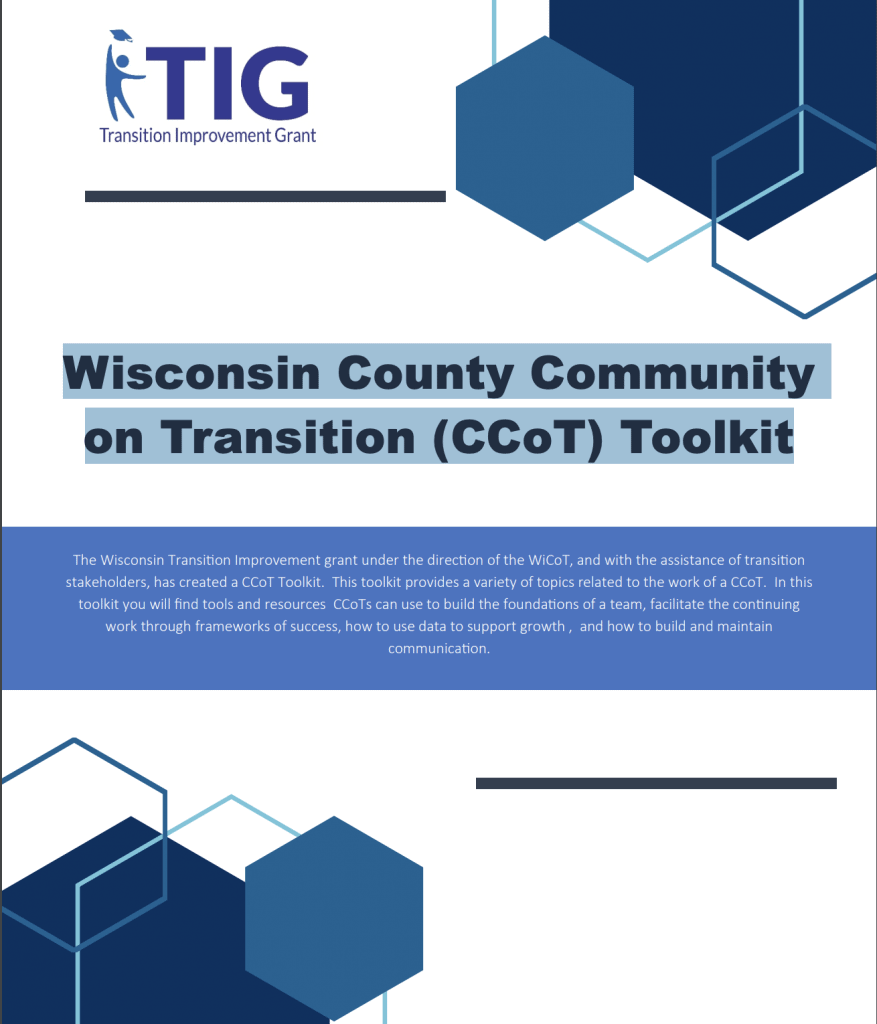
Wisconsin County Community on Transition (CCoT) Toolkit
Content Areas County Communities on Transition (CCoT)
Resource Type Document
In this toolkit you will find tools and resources CCoTs can use to build the foundations of a team, facilitate the continuing work through frameworks of success, how to use data to support growth, and how to build and maintain communication.
411 on Disability Disclosure
Content Areas Indicator 13 - Postsecondary Transition Plan, Self Advocacy
Resource Type Link
The 411 on Disability Disclosure: A Workbook for Youth with Disabilities is designed for youth and adults working with them to learn about disability disclosure. This workbook helps young people make informeddecisions about whether or not to disclose their disability and understand how that decision may impact their education, employment, and social lives. Based on the premise that disclosure is a very personal decision, the Workbook helps young people think about and practice disclosing their disability.

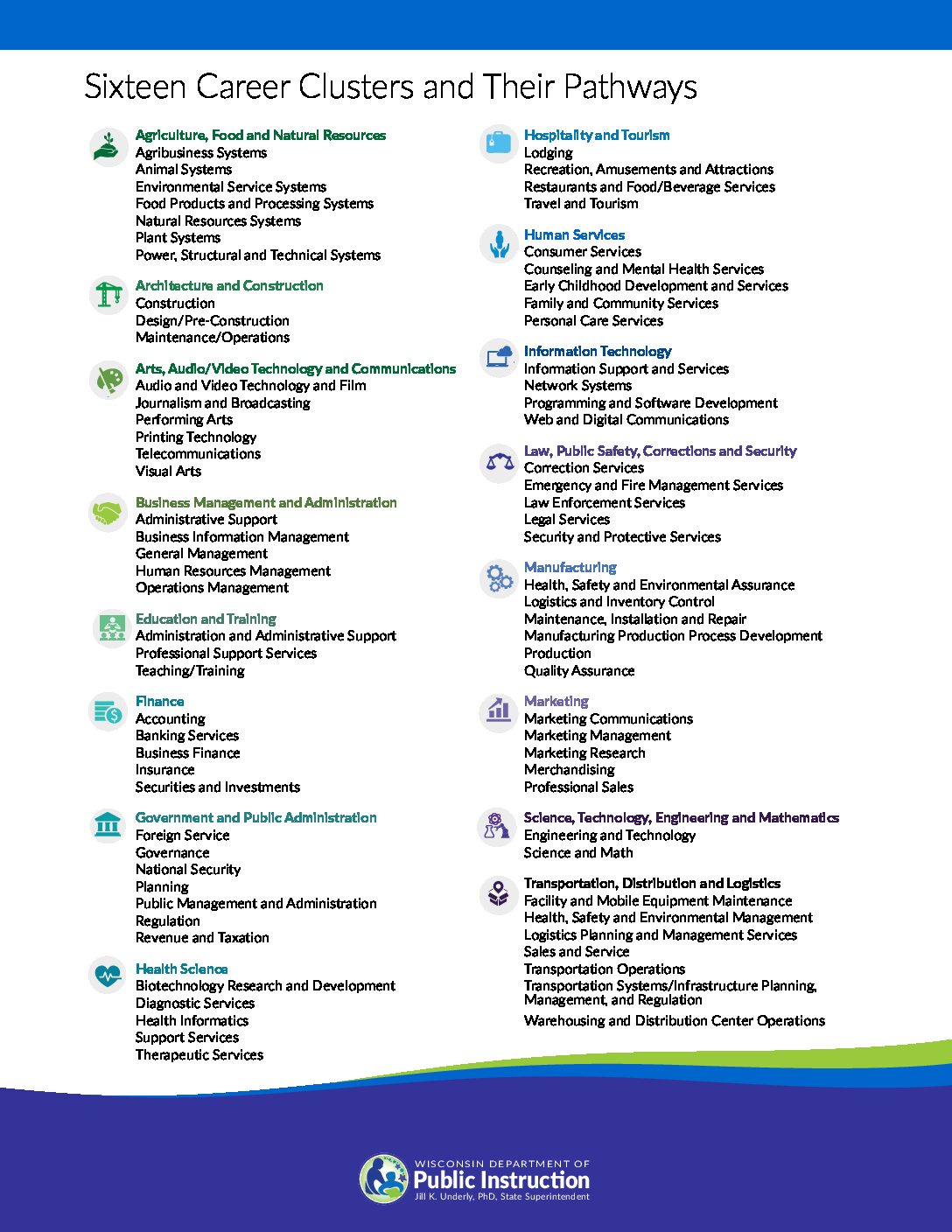
Sixteen Career Clusters and Their Pathways
Content Areas Indicator 13 - Postsecondary Transition Plan
Resource Type Document
This resource outlines the 16 career clusters and displays the pathways. These align with the Department of Public Instruction and the Postsecondary Transition Plan (PTP).
Transition Assessment Guide
This guide is designed to help educators and transition planning teams better understand, select, and use transition assessments to support students with IEPs as they prepare for life after high school.

Transition Assessment Guide Presentation
Content Areas Best Practices
Resource Type Document
Explore the structure and purpose of the TIG Transition Assessment Guide and how it supports transition planning, and identify practical ways to apply the guide and available assessments to meet the diverse needs of students.
